Re-excavating Antioch: The First New Publication of Princeton’s Excavations of the 1930s
Antioch is an invisible city, assumed to have faded out after the Islamic conquests in the early seventh century. Indeed, this perspective carries in scholarship until today. The Princeton archaeologists of the 1930s set Byzantine Antioch as their prize and documented extraordinarily little of the excavated remains of the medieval city. Synthetic analysis of urban transformations was not a priority. Recent research is beginning to demonstrate that the city did indeed have a rich afterlife and experienced meaningful change. This paper will present the first new publication of the Princeton excavated material of sector 17-O.
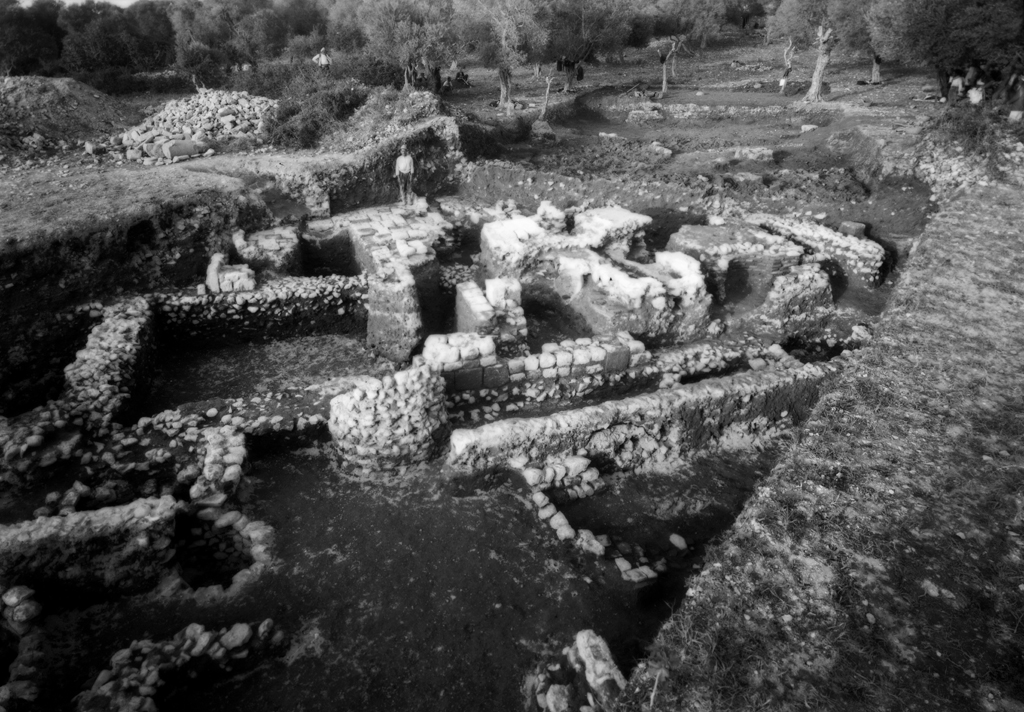
Excavated in 1937, 17-O was designated as a pilot area of the larger project and thus was not published. The area did not possess any mosaics and is supposedly located at the crossroads of the city, at the edge of the Forum of Valens. It also has a long stratigraphic record of the city’s occupation and therefore acts as a microcosm of larger urban transformations. 17-O began as a public space in the Early Roman period with a nymphaeum that was restored twice and continued until the 5th century when it and the entire area were destroyed by fire (and likely earthquake). Between the 5th and 7th centuries, a courtyard house with a series of shops on a side street off the cardo appeared and grew into three courtyard houses with attached shops by the 8th century. In the Middle Byzantine and Crusader periods, 10th–12th centuries, these houses were reused, subdivided, and fitted with kilns for ceramic production. The publication project harnesses recent studies on ceramics, glass, and small finds and situates these back in stratigraphic context using the archived notebooks, maps, and photographs. The transformations of this area are representative of shifts in Antioch and follow the trajectory documented in other Greco-Roman cities.
Asa Eger is Professor of the Islamic World in the Department of History at the University of North Carolina at Greensboro. He has also been a Fellow at the Research Center for Anatolian Civilizations (ANAMED) at Koç University in Istanbul, Dumbarton Oaks Washington, DC., the Institute of Hellenic Studies in Princeton, the American Council of Learned Societies, and this past year at the National Humanities Center in Durham. Dr. Eger works primarily on the Early Islamic world, looking at frontiers, environmental history, landscapes, the relationship between cities and their hinterlands, and public, legacy, and community archaeology. His fieldwork in Turkey has been in the southeast: the Hatay (Antioch), Adana, Osmaniye, and Kahramanmaras Provinces. Since 2022, he has codirected the Caesarea Coastal Archaeological Project in Israel. Dr. Eger has published five books and over 35 papers. He has twice been awarded the American Schools of Overseas Research’s G. Ernest Wright Book Award for the best book in Near and Middle Eastern archaeology—in 2015, for his book The Islamic-Byzantine Frontier: Interaction and Exchange Among Muslim and Christian Communities and in 2022, with co-author Andrea de Giorgi, for his book: Antioch: A History.
This lecture will take place live on ZOOM, followed by a question and answer period.
REGISTER | POSTER | TIME ZONE CONVERTER

